Electricity is the one resource you cannot store.
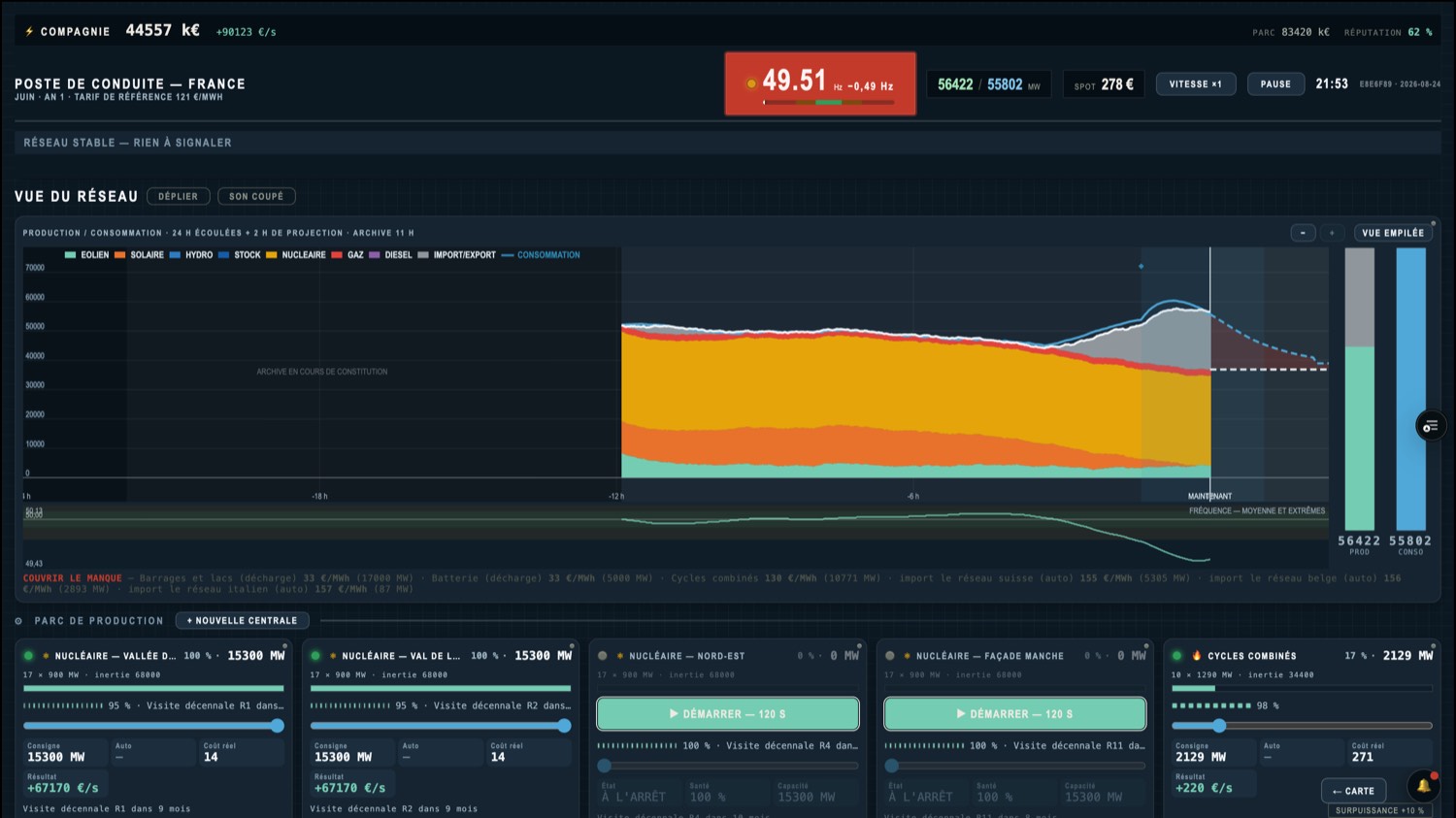
You run a power utility: you buy the fuel, you build the plants, you sell the electricity — and you hold your grid at 50 Hz. One second of inattention costs you hours of black start.
Green band — nothing to report
This dial really runs. In the game, you are the one holding it.
Overproduction costs as much as a shortage.
When it goes dark
A blackout is not the end. It's the name of the game.
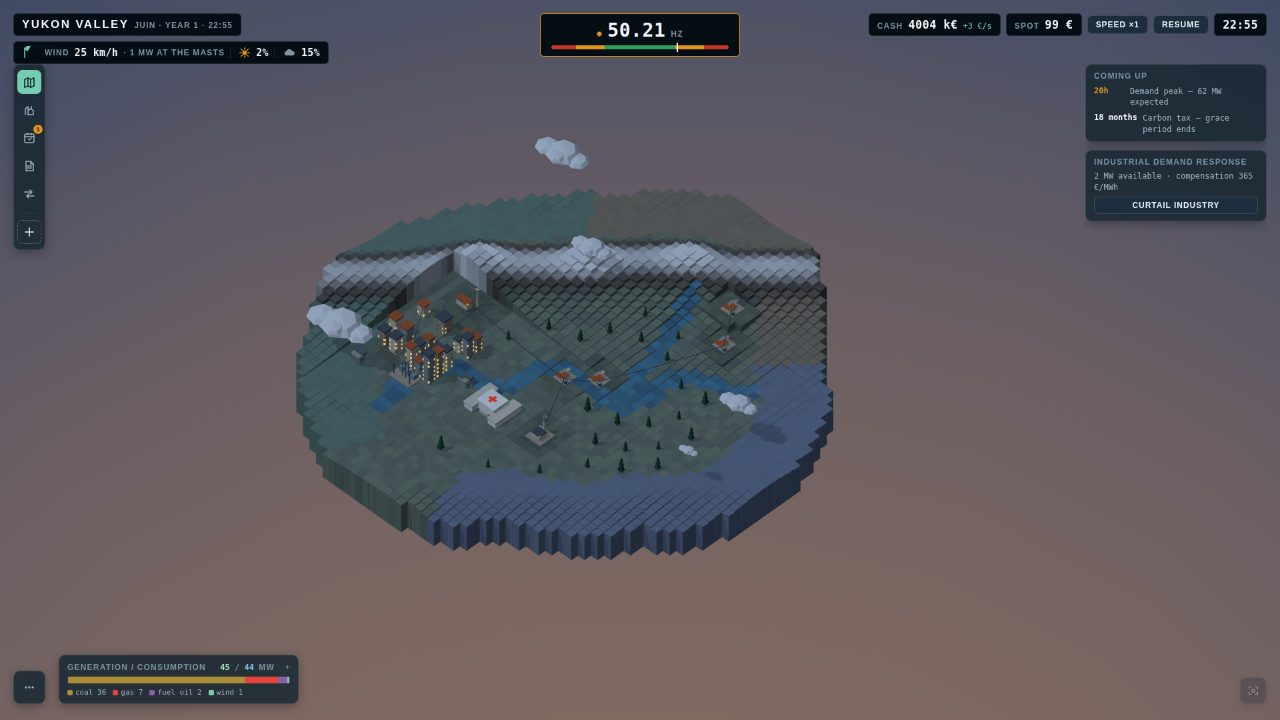
A January night in the Yukon. The neighbour's line trips, one diesel set against the town. The frequency slides from 49 to 47.5 Hz in thirteen seconds, automatic load shedding cuts what it can — and the grid collapses. Then you bring it back, zone by zone.
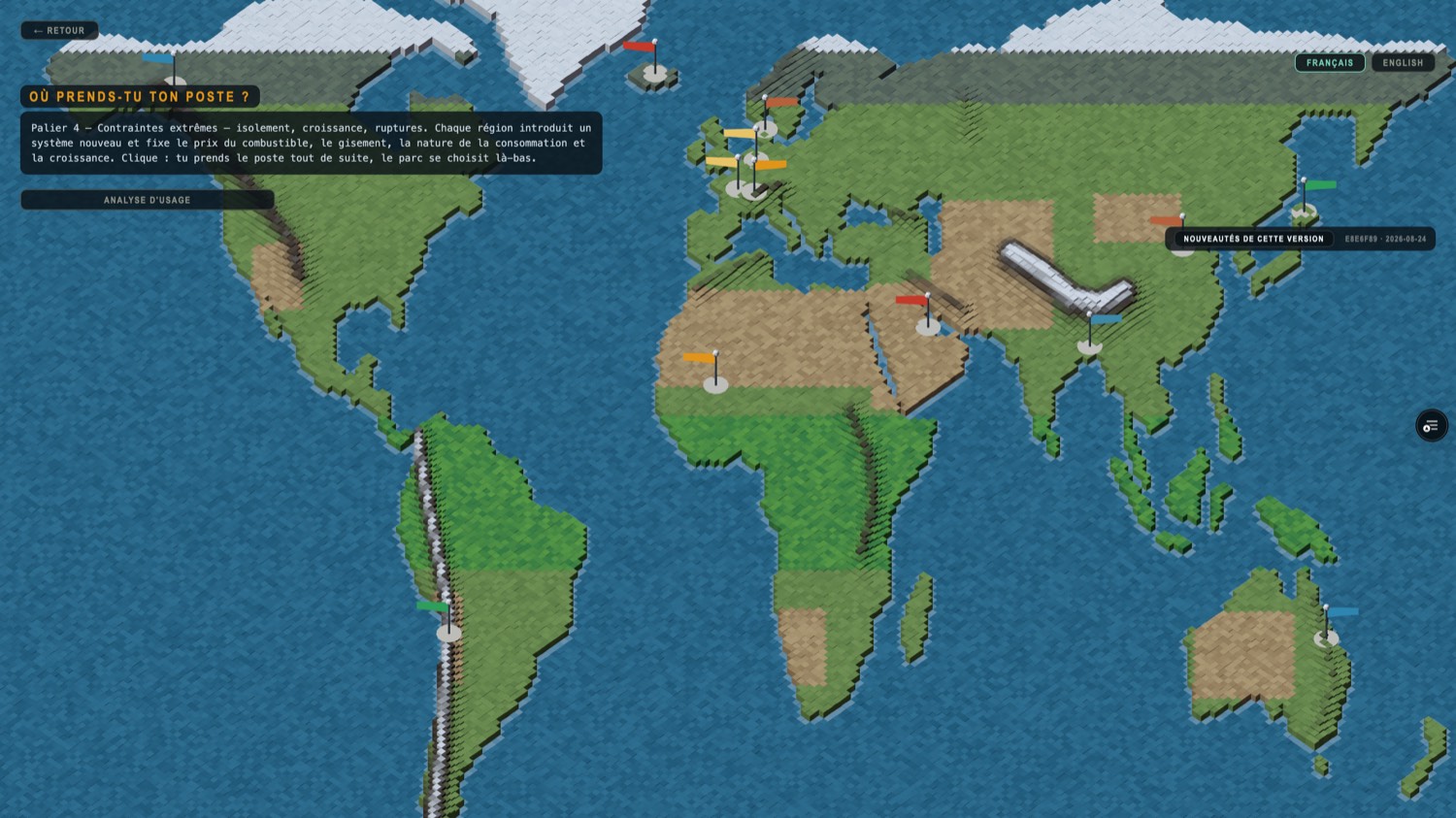
- 13regions, five continents
- 15kinds of generation, from diesel to a reactor
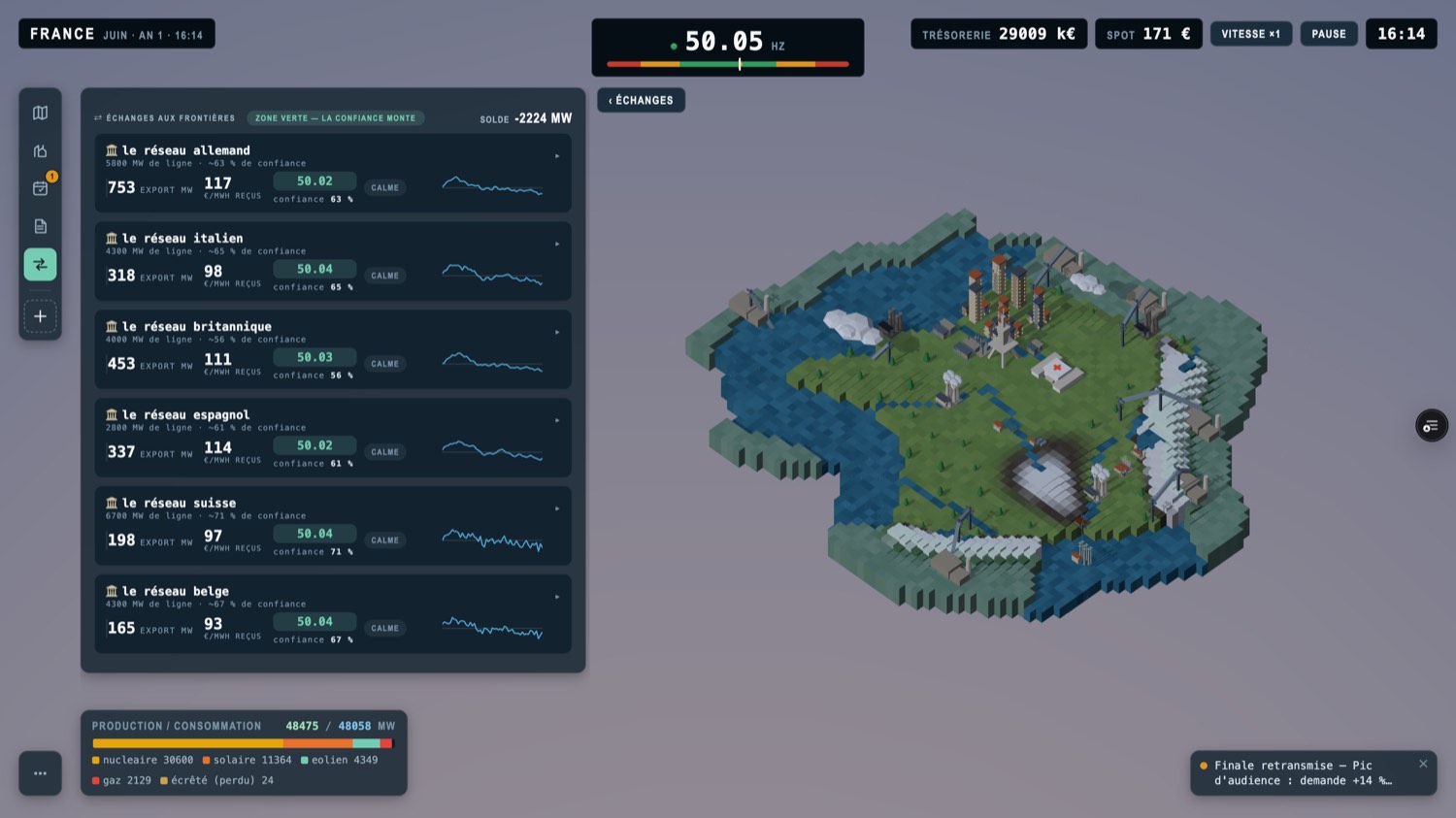
- 6borders for France
- 50.00Hz to hold, second after second
What you run
An entire country on a single console
Thirteen regions, from the Ghawar oil basin to the French nuclear fleet. Each one sets its climate, its fuel, its demand and its borders.
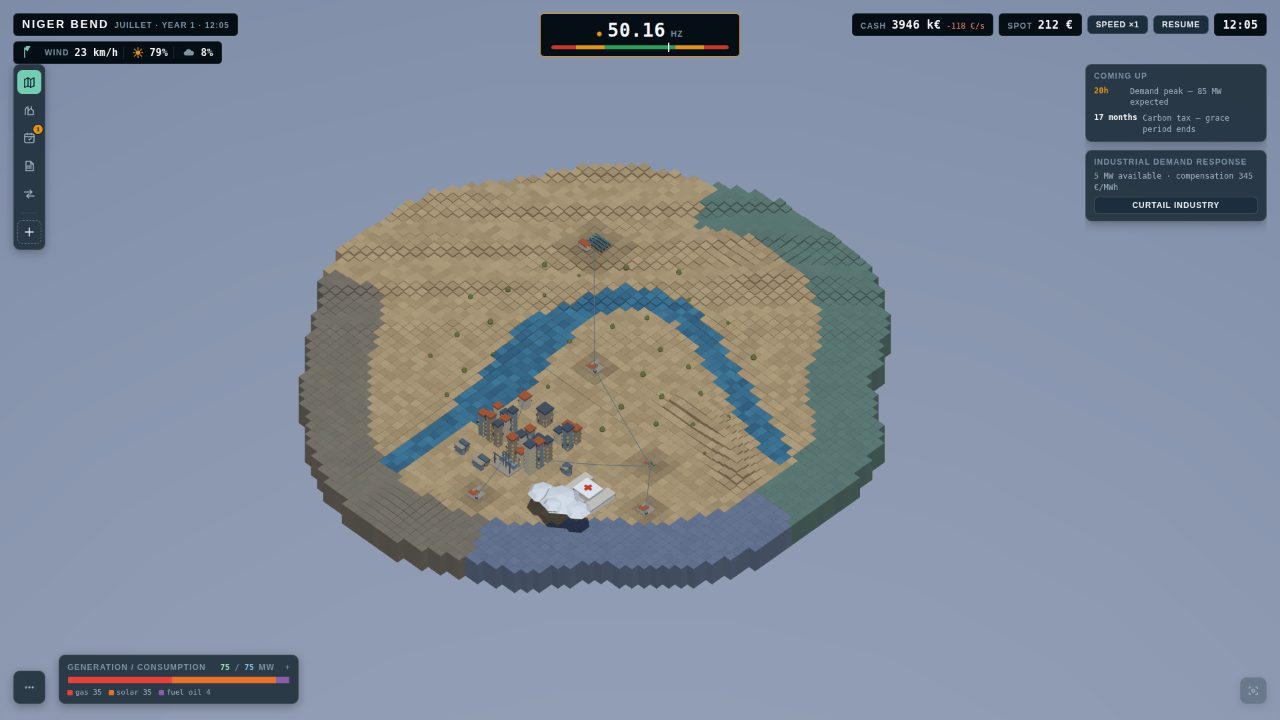
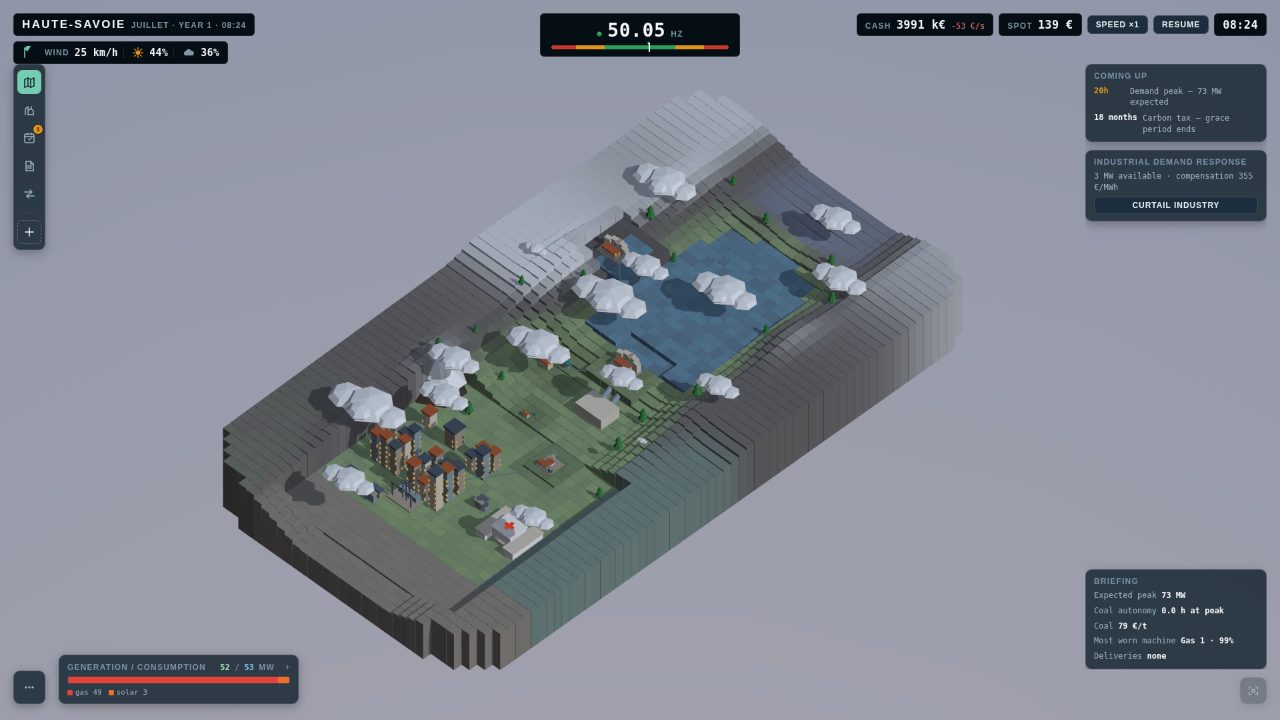
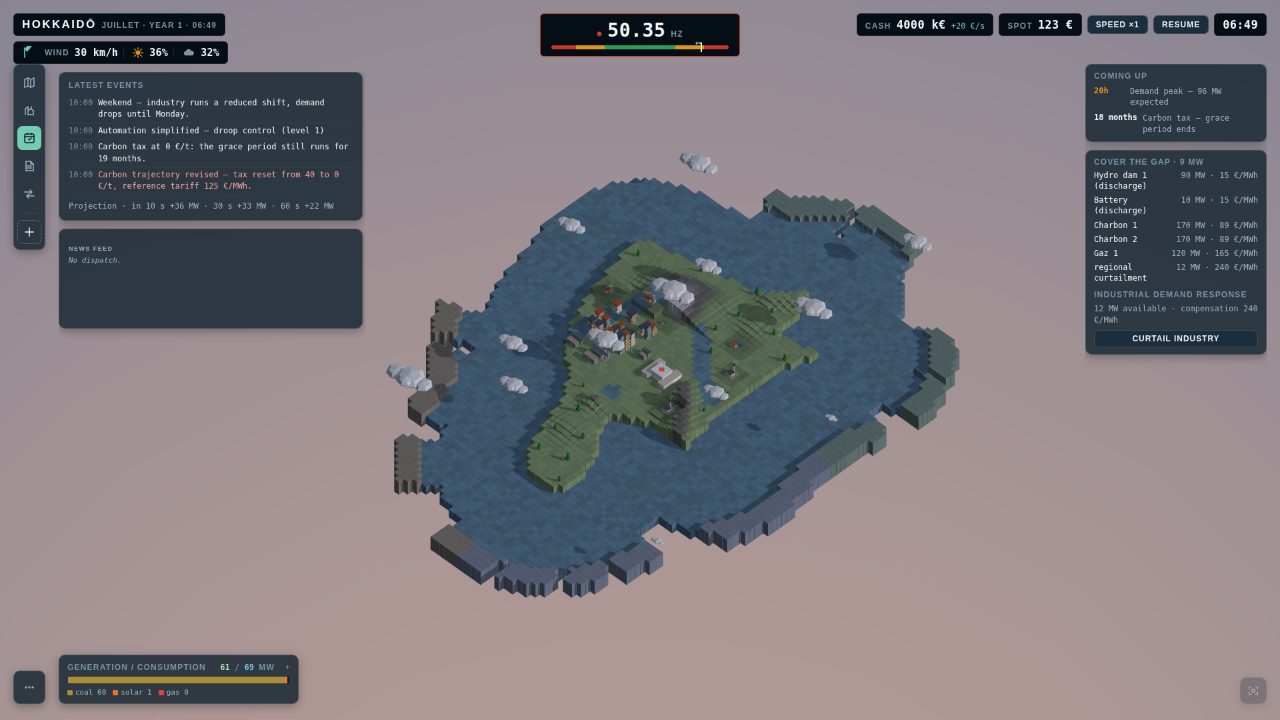
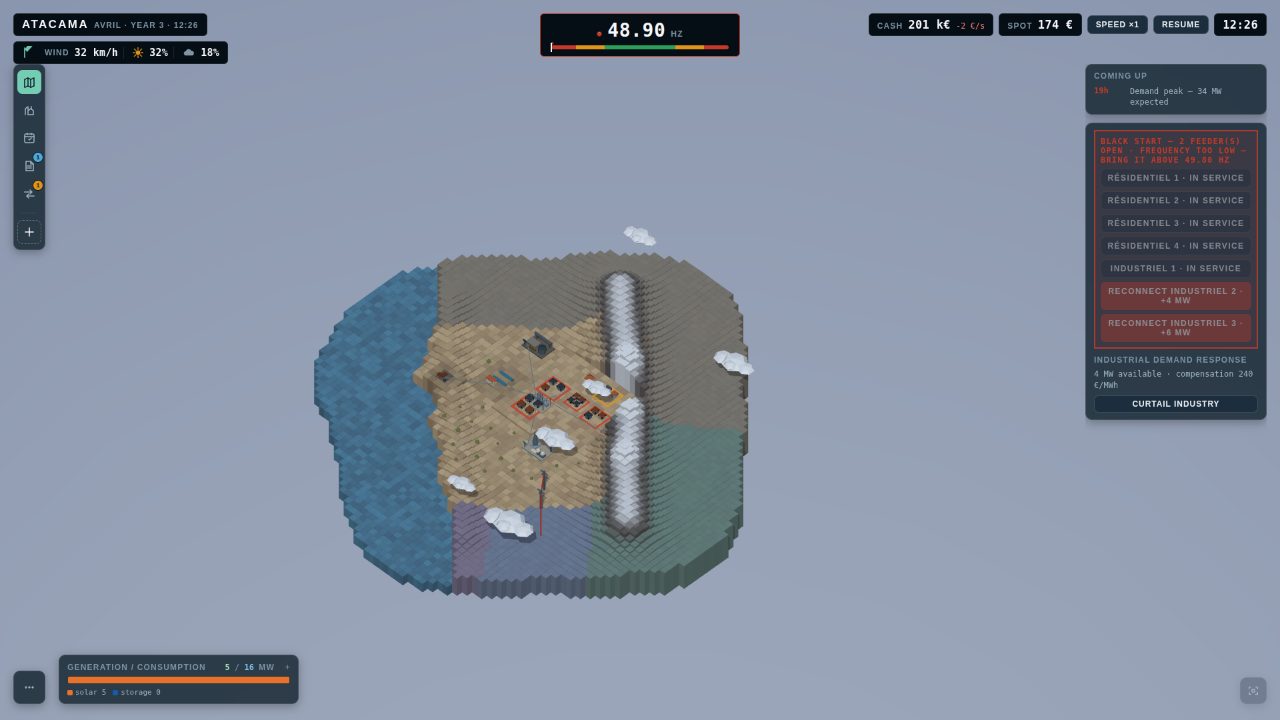
The mechanics
What keeps the dial alive
Inertia
Spinning turbines slow the drift and buy you time to react. Solar and wind bring none: the more your mix decarbonises, the more nervous your grid becomes.
Spinning reserve
A plant running at 30% burns fuel for almost nothing. But it can climb to 200 MW in a minute, where a cold plant needs half an hour to start. That margin is the spinning reserve: what you pay to be able to react.
Black start
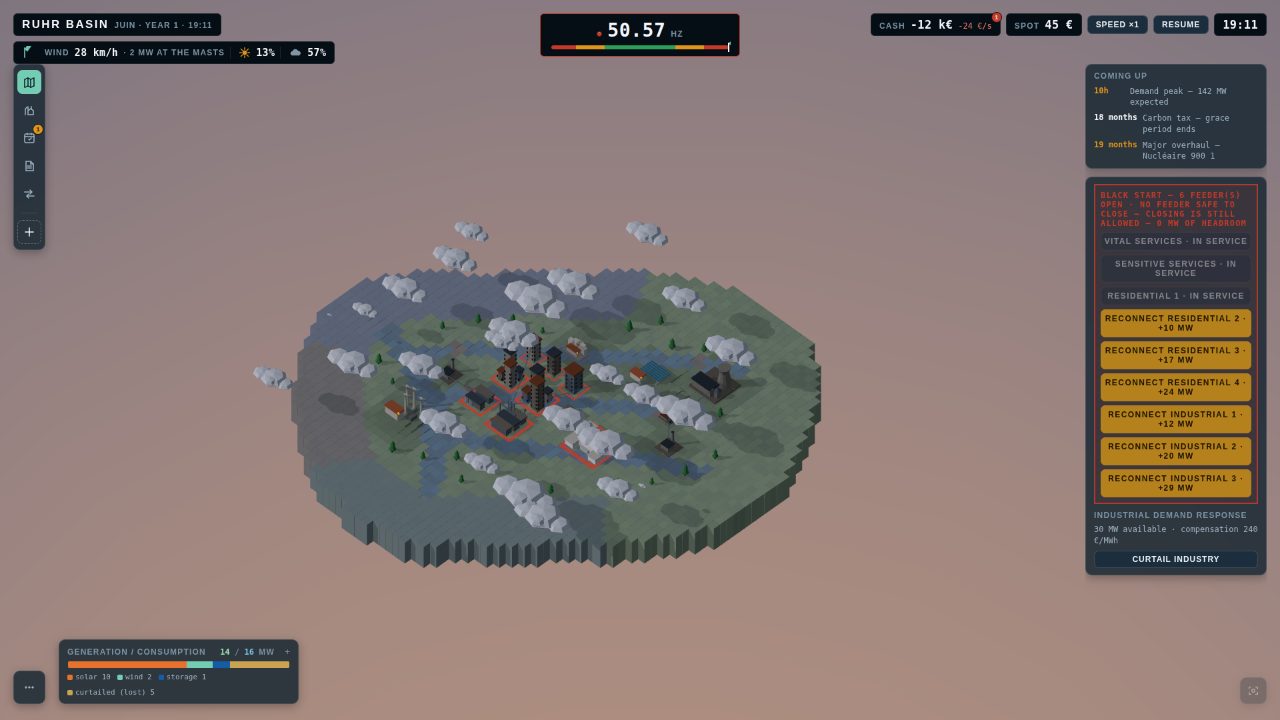
A blackout is not game over. It's a night spent relighting the grid zone by zone, never exceeding what your machines can hold.
The demo
Two hours, free, in your browser
A black start drill, then five regions — Ghawar, the Yukon, the Ruhr, Jutland and Queensland — up to the first year's balance sheet. Your save exports and picks up exactly where it left off in the full version.
Coming in the full version: scenarios drawn from real days — the Iberian blackout of April 2025, Italy in September 2003, Texas in February 2021 — at several difficulty levels, from simple to very hard. You take the seat of the operators who held the grid those days. This game is our thanks to them.
- Genre
- Management · real-time simulation
- Players
- Single player
- Languages
- English, French
- Pace
- Real-time with pause
- Platforms
- Browser, Windows, macOS, Linux
- Release
- Early access on Steam, date to be announced — the demo is playable now